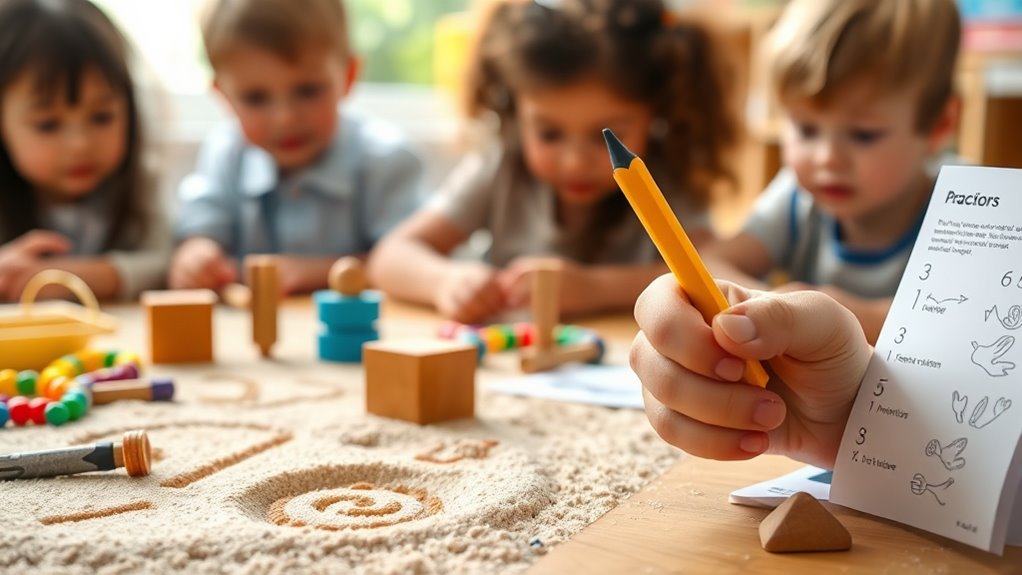
Fine motor skills matter in pre-primary as precise hand movements underpin daily independence and classroom participation. As you plan activities, you’ll see how grip control, dexterity, and hand–eye coordination support self-help tasks like dressing, feeding, and hygiene, plus early literacy and numeracy through letter formation and number writing. Regular, brief practice fosters steadiness, bilateral coordination, and release control, reducing frustration and boosting confidence. If you keep exploring, you’ll uncover practical strategies to implement right away.
Key Fine Motor Milestones by Age in Pre-Primary

Key fine motor milestones by age in pre-primary typically unfold in identifiable stages, guiding teachers and parents on what to expect and when to intervene. You’ll notice early grip patterns evolving from palmar to pincer as hand strength develops during play-based tasks. In the 3–4 age range, you’re looking for improved controlled scribbling, simple cutting with safety scissors, and better pencil grasp. By 4–5 years, fine motor precision supports self-help skills like buttoning, zipping, and tracing basic shapes, reflecting growing pre primary development. Across these stages, you’ll see gradual increases in steadiness, bilateral coordination, and release control. Monitoring these fine motor milestones helps you tailor activities, provide timely support, and foster an inclusive environment where every child progresses with confidence.
How Fine Motor Skills Enable Everyday Independence
Fine motor skills are the backbone of daily independence, enabling children to perform fundamental self-care tasks with minimal adult assistance. You’ll notice that precise grip, controlled hand movement, and finger dexterity support activities like dressing, feeding, and personal hygiene. By supporting these skills, you’re nurturing autonomy in practical, real-world contexts, not just during therapy sessions. The evidence base shows that incremental practice builds confidence, reduces task completion time, and lowers frustration thresholds, contributing to smoother transitions between activities. You should emphasize long term planning: structuring goals across months, integrate tasks into routines, and harmonize supports with each child’s pace. When you track progress, you reinforce a sense of belonging and competence, underscoring that fine motor development is foundational to ongoing independence.
How Fine Motor Skills Drive Classroom Participation and Routine
How do fine motor skills shape what happens in a classroom? You’ll see participation rise as you link tasks to movement, routine, and peer interaction. The evidence indicates small, deliberate practice supports engagement and smooth transitions, creating an inclusive climate where every child can contribute. Focus areas include self-regulation during tasks, use of materials, and consistent sequencing that reinforces expectations through movement.
- You establish predictable routines that scaffold fine motor tasks and group involvement.
- You integrate playful handwriting and sensory tracing to ease transitions between activities.
- You monitor how grip, pressure, and speed affect participation and adjust materials accordingly.
- You foster peer collaboration, enabling shared success through precise, deliberate actions.
How Fine Motor Skills Support Early Literacy and Numeracy
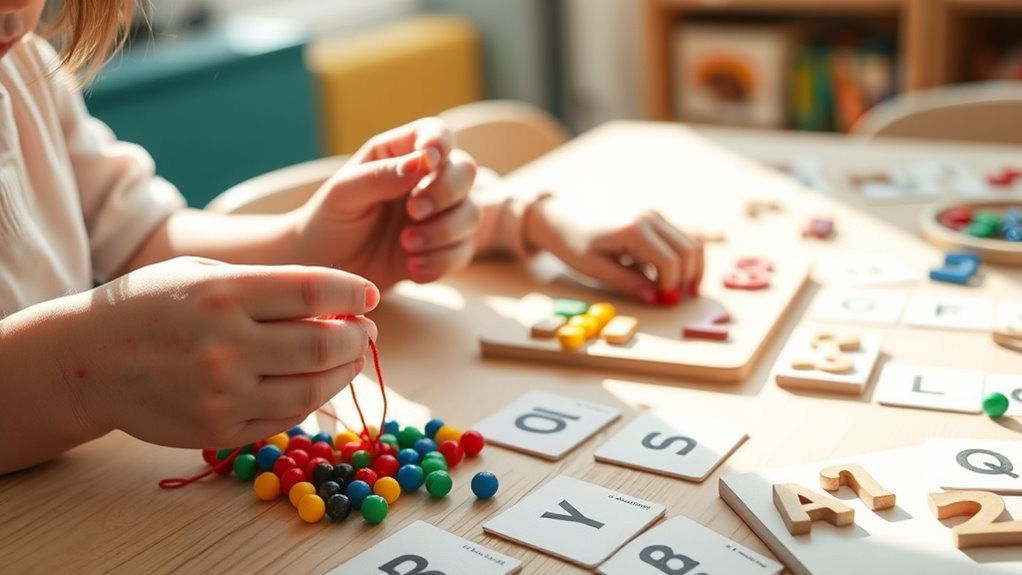
You’ll see how Fine Motor Foundations support early literacy and numeracy as you link hand movements to letter formation, tracing, and number writing. Early Writing Skills emerge when children coordinate finger control with pencil grip, thereby strengthening handwriting fluency and spelling routines. This connects Number Sense and literacy through activities that pair counting with fine motor tasks, building integrated academic pathways.
Fine Motor Foundations
Why do small, intentional movements matter in early learning? You’ll see how precise actions support literacy and numeracy foundations, not just handwriting. Through functional tasks, your classroom builds foundational neural pathways that support letter recognition, sound blending, and quantity sense. This is evidence-based practice: purposeful manipulation strengthens fine motor control, which relates to early academic success. Be mindful of debunking: you’ll address fine motor myths and classroom myths to nurture a confident, inclusive environment where every child belongs. Use varied, meaningful activities that integrate movement with cognition.
- Assess goals, not just grip strength.
- Integrate manipulatives with literacy and math concepts.
- Support tasks gradually to match each learner.
- Reflect on myths to sustain an inclusive, evidence-driven approach.
Early Writing Skills
Early writing skills emerge from coordinated fine motor control, with precise pencil grasp, letter formation, and controlled pressure shaping the path that links handwriting to emerging literacy and numeracy. You’ll notice that proficient fine motor control supports letter sounds, sequencing, and word construction, laying a foundation for classroom participation and confidence. Practice with deliberate, small-mibered movements builds consistency in letter size, spacing, and stroke direction, reducing fatigue and frustration. Printing techniques, such as legible letter formation and regular consistency, reinforce decoding and comprehension. Handwriting tools—pencils, grips, and ergonomic supports—are not distractions but bridges to independence, allowing you to engage in shared writing, journaling, and early math notation. With targeted, evidence-based activities, you foster belonging, autonomy, and steady progress in both literacy and numeracy.
Number Sense Connections
Number sense and fine motor skills intertwine to support early literacy and numeracy by enabling precise counting, spatial awareness, and number writing. You’ll see how small, intentional actions reinforce big ideas in math and language, within trusted classroom routines. Evidence points to integrated activities that blend manipulation with counting, labeling, and symbol formation, strengthening neural connections.
- Build counting routines with manipulatives to ground number sense in concrete experiences.
- Use tracing and shaped-stencil activities to link hand movements with numeral formation.
- Pair quick, data-informed assessments with targeted feedback in daily classroom routines.
- Apply fine motor tasks during number talks to deepen conceptual understanding and collaboration.
Annual Progression: Fine Motor Development Across the School Year
Annual progression in fine motor development across the school year shows consistent growth patterns linked to sustained practice and supported activity exposure. You’ll observe gradual gains in grip control, dexterity, and coordinated hand–eye actions as children repeatedly engage varied tasks. The trajectory reflects cumulative experience, with milestone plateaus brief and followed by renewed skill leaps after targeted practice. Regular, age-appropriate challenges—without pressure—support transfer to classroom tasks like cutting, tracing, and tool use. Documenting small, observable improvements helps you validate progress and tailor instruction to individual needs. Emphasize safe, inviting environments that encourage exploration, repetition, and peer encouragement, reinforcing a sense of belonging. Align activities with developmental benchmarks, monitor consistency, and adjust intensity to sustain momentum across the school year.
Daily Activities That Build Fine Motor Power
You’ll explore daily tasks that quietly strengthen fine motor strength through practical, evidence-based activities. Simple, enjoyable routines—like manipulating small objects, lacing, and precise scissors work—support skill development in short, consistent sessions. This discussion focuses on how these daily tasks can be integrated into classroom and home routines to boost manual dexterity and sustained attention.
Daily Tasks That Strengthen
Daily tasks that strengthen fine motor strength are best approached through short, purposeful activities embedded in routine routines. You’ll build fine motor milestones by weaving precise motions into daily moments, reinforcing skill without extra pressure. In classrooms, consistent classroom routines support transfer to broader tasks and confidence.
- Thread objects or use laces during dressing or cleanup, promoting controlled finger movements.
- Clip and unclip fasteners during transitions, targeting pincer grasp and hand strength.
- Peel fruits or vegetables at snack time, strengthening supination and coordination.
- Pour water with cups or containers, encouraging careful grip and steady wrist control.
Fun Fine-Motor Activities
What fun ways can daily activities boost fine motor strength without adding extra workload? You’ll discover practical, evidence-based routines that integrate seamlessly into classroom life. Fun fine-motor activities use playful finger tracking and rhythmic hand stretching to strengthen precision and dexterity during ordinary tasks, not through extra drills. These play-aligned practices promote belonging by inviting participation from all peers and caregivers.
| Activity | Focus | Benefit |
|---|---|---|
| Finger tracing while reading | Visual-motor integration | Improves control and coordination |
| Morning stretch songs | Rhythmic hand stretching | Builds endurance and flexibility |
| Button and zipper stations | Fine manipulation | Enhances dexterity for everyday tasks |
Incorporate these simple, kid-centered choices to support steady progress and a confident sense of belonging in your classroom.
Simple Observations to Track Fine Motor Growth
Simple observations provide a practical, time-efficient way to monitor fine motor growth in pre-primary learners. You’ll track progress through brief, repeated checks that reveal patterns and small improvements, grounded in evidence-based practice. Your focus stays on actionable data, not judgment, nurturing a sense of belonging as learners see their own growth. Pay attention to common milestones like grip consistency, pencil control, and hand-eye coordination during short activities.
Simple, quick observations map fine motor growth with care, turning tiny gains into confident progress.
- Note how grip evolves during simple writing tasks.
- Observe precision in color sorting and object manipulation.
- Record how long tasks hold attention and accuracy improves.
- Compare bilateral hand use in quick, varied challenges.
These tiny habits create a clear picture of development without pressure, supporting informed, compassionate decisions about next steps.
Practical Strategies for Educators and Parents to Support Growth

Practical strategies for educators and parents to support growth in fine motor skills center on structure, consistency, and responsive feedback that align with evidence-based practices. You’ll embed short, regular practice sessions into daily routines, with clear objectives and predictable transitions. Use hands on assessments to monitor progress, guiding adjustments in task difficulty and materials. Provide open-ended prompts that invite problem solving, while offering timely, specific feedback to reinforce correct grip, wrist stability, and precision. Encourage parental workshops to model activities, share accessible at-home tools, and foster shared language around goal setting. Prioritize inclusive activities that respect diverse abilities and cultural contexts, ensuring every child experiences success. Document outcomes, iterate strategies, and celebrate incremental growth to sustain motivation and belonging.
Frequently Asked Questions
What Roles Do Fine Motor Skills Play in Early Social Development?
In early social development, fine motor skills support confident, coordinated peer interaction and collaborative play. You’ll notice improved self-regulation during Early play, enabling meaningful social engage. Fine motor development underpins social development, guiding practical, evidence-based peer collaboration.
How Can Parents Assess a Child’s Fine Motor Readiness at Home?
You can assess your child’s fine motor readiness at home by watching for steady pencil grip, scissors control, and puzzle completion; use home activities and simple assessment indicators to gauge progress, adjusting tasks to fit their confidence and belonging.
Which Toys Most Effectively Support Progressive Fine Motor Growth?
Tile toys and sensory play most effectively support progressive fine motor growth; you’ll see steady grasp, pinch, and bilateral coordination gains as your child engages, learns patterns, and builds confidence within a collaborative, evidence-based play routine.
When Should Educators Escalate Concerns About Motor Development?
You should escalate when you notice persistent delays or red flags beyond expected milestones, typically after targeted interventions. About 90% of children improve with timely support, so document concerns, track motor development, and work with specialists to guide steps.
How Do Nutrition and Sleep Influence Fine Motor Progress?
Nutrition and sleep influence fine motor progress: adequate sleep supports motor learning consolidation, whereas nutrition provides fundamental micronutrients for neural development and muscle function; together, they improve hand-eye coordination, grip strength, and task persistence, fostering inclusive classroom participation.