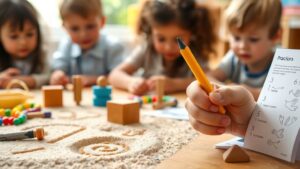

NCERT provides a clear, standards-aligned framework, while Montessori emphasizes student-driven, hands-on exploration. Together, they create a rigorous, inquiry-led classroom that remains accessible and meaningful. You map NCERT standards to tangible tasks, ensuring progression and accountability, then let independent, collaborative exploration unfold through guided discovery and reflective dialogue. You balance high-impact materials with time-efficient routines, using structured choices to nurture autonomy without losing clarity. If you keep exploring, you’ll uncover concrete strategies and practical implementation steps.
What NCERT and Montessori Bring to Your Classroom
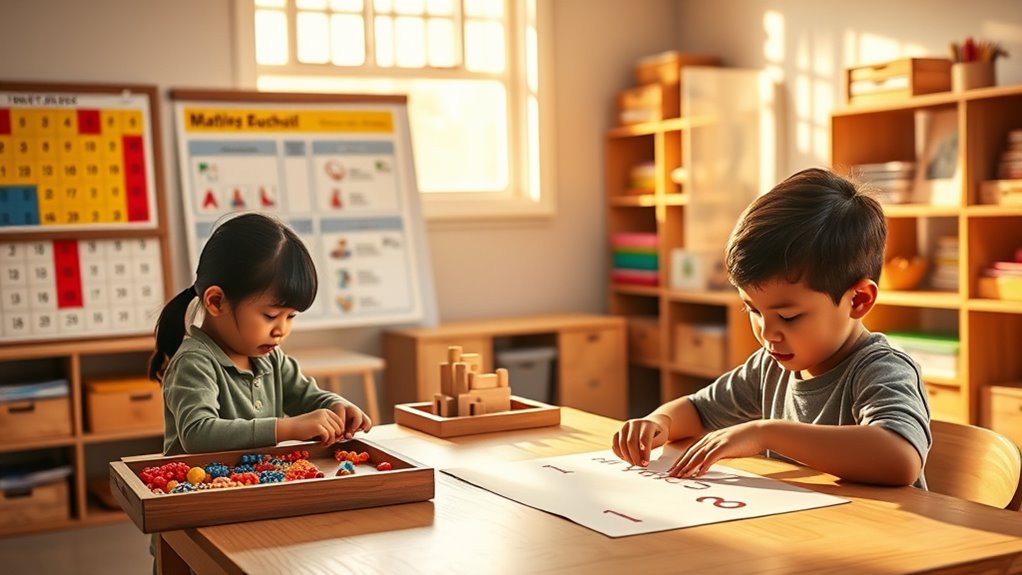
NCERT provides a structured, standards-aligned framework that helps you anchor lessons in nationally recognized content and outcomes, whereas Montessori emphasizes student-driven exploration and hands-on learning. You’ll notice how NCERT alignment supports clear criteria, progression, and accountability, giving you a reliable backbone for curriculum mapping and assessment. At the same time, Montessori independence invites learners to choose tasks, experiment, and reflect, fostering intrinsic motivation and personalized pacing. This combination encourages a balanced classroom where rigor meets curiosity, and where collaboration thrives as you coordinate objectives with student interests. Two word discussion ideas: NCERT alignment, Montessori independence. By integrating both approaches thoughtfully, you create an inclusive environment that validates diverse contributions, cultivates confidence, and reinforces belonging while maintaining coherence across topics and activities.
Align Standards With Hands-On Learning: a Step-By-Step Framework
How can you align standards with hands-on learning without losing coherence? You map standards to tangible tasks, then sequence activities to build understanding step by step. You’ll compare techniques, selecting activities that demonstrate core principles while remaining accessible to all learners. This framework emphasizes clarity: define learning targets, align assessments, and embed meaningful hands-on tasks early, then scale complexity as confidence grows. Resource prioritization guides you toward high-impact materials and time-efficient routines, ensuring every activity supports both NCERT standards and Montessori sensibilities. You’ll foster collaboration by inviting student choices within structured goals, creating a sense of belonging and shared purpose. Together, you’ll refine expectations, monitor progress, and iterate for coherence and momentum.
- Techniques comparison to choose effective activities
- Resource prioritization for efficient planning
- Structured alignment with ongoing assessment
Designing Core-Concept Activities for NCERT Topics
To design core-concept activities for NCERT topics, start by identifying the central ideas students must grasp and map them to concrete, student-friendly tasks. You’ll translate abstractions into accessible benchmarks, ensuring each activity targets a core concept while inviting collaboration. Design hands on activities that scaffold understanding, linking theory to real-world contexts so learners feel a sense of belonging and purpose. Prioritize clarity: define objective, expected outcomes, and assessment criteria upfront, then choose manipulatives, simulations, or guided inquiries that align with those targets. Build in feedback loops, peer discussion, and reflective prompts to reinforce comprehension without overwhelming learners. When you design, you foster autonomy through purposeful sequencing, pacing, and differentiation, maintaining focus on core concept mastery and inclusive participation.
Build Independence With Structured Learning Choices

Structured choices empower students to own their learning as you maintain clear guidance. You’ll foster independence routines by framing options that align with NCERT concepts and Montessori sensibilities, allowing pace and style to reflect student needs. When you offer structured choices, you invite collaboration rather than dictate, supporting confidence and belonging. Carefully balanced selections ensure cognitive load stays manageable while still challenging. You’ll monitor progress with concise check-ins, guiding reflection and adjustable pathways. The goal is not conformity but empowered agency within a supportive framework.
- Clearly defined options that map to learning goals
- Routines that scaffold autonomy without overwhelming
- Regular feedback loops that reinforce growth and belonging
Assessments That Honor NCERT Standards and Montessori Practice
You’ll explore assessments that blend NCERT-aligned activities with Montessori-driven practices to gauge learning progress. By pairing NCERT-aligned learning activities, Montessori-driven assessment practices, and balanced evaluation strategies, you’ll cultivate clear, actionable insights for teachers and learners alike. This discussion aims to clarify how these approaches can work together to honor standards while supporting individualized growth.
NCERT-Aligned Learning Activities
Integrating NCERT-aligned learning activities with Montessori practice guarantees assessments honor national standards while preserving student-centered, hands-on exploration; this balance supports clear outcomes, ongoing feedback, and meaningful connections between concepts and real-world applications.
You’ll design tasks that are NCERT aligned yet adapt to individual paces, encouraging collaboration and inquiry. Montessori-inspired modes—concrete materials, guided discovery, and reflective dialogue—anchor learners in authentic contexts, while classroom integration reinforces transferable skills across subjects. Your approach uses clear criteria, ongoing rubrics, and formative checks to guide growth without stifling curiosity.
- nc ert aligned, learning activities, montessori inspired, classroom integration
- purposeful variation supports inclusion and collective achievement
- ongoing feedback links standards to real-world problem solving
Montessori-Driven Assessment Practices
Montessori-driven assessment practices center on authentic, student-led evidence that aligns with NCERT standards while preserving inquiry and hands-on learning. You’ll evaluate progress through meaningful demonstrations, not rote testing, ensuring every observation informs next steps. Your approach emphasizes process over product, inviting you to document growth in real contexts—lab experiments, reading conversations, and collaborative projects—so assessment feels natural and inclusive. By aligning criteria with NCERT objectives, you nurture classroom independence while maintaining clear expectations. You’ll co-create rubrics with learners, fostering ownership and belonging. Feedback becomes guidance rather than judgment, supporting iterative refinement. In this way, you honor Montessori practices—freedom with responsibility—within a framework that respects curricular goals, encouraging sustained curiosity, peer support, and a shared commitment to meaningful learning.
Balanced Evaluation Strategies
Are we striking the right balance between standards rigor and student-centered, Montessori-informed assessment? You’ll find balanced evaluation hinges on linking NCERT benchmarks with tangible classroom experiences, not through test-centric drills alone. With assessment integration, you track growth across cognitive, social, and practical skills, ensuring no learner is underserved. You’ll design tasks that reveal understanding through concrete materials, reflection, and peer discourse, while aligning with core standards. The aim is clarity, fairness, and belonging, so every child sees how their efforts map to learning goals. Keep feedback actionable and timely, fostering a collaborative climate where students co-own progress. Balance emerges when rubrics, observations, and performance tasks reinforce, rather than contradict, each other.
- Aligns standards with authentic tasks for deeper mastery
- Combines formative insights with summative clarity
- Fosters inclusive, participatory evaluation practices
Blended Classrooms: Physical and Digital Setups That Work
Blended classrooms combine the strengths of physical interactions and digital tools to support diverse learners, but the key is purposeful align. You’ll design spaces that leverage hands-on activity alongside targeted online experiences, ensuring accessibility and belonging for every student. Critical choices include clear routines, intentional groupings, and real-time feedback that links tactile exploration with digital glossaries and simulations. When done well, online collaboration and sensorimotor activities reinforce each other, not compete for attention. Sensory integration becomes a bridge, guiding pacing, supports, and assessment. Below is a simple framework to organize thinking and outcomes across modalities.
| Physical Tasks | Digital Tools | Outcomes |
|---|---|---|
| Hands-on experiments | Collaborative platforms | Deeper understanding |
| Read-alouds with manipulatives | Adaptive apps | Enhanced retention |
| Peer teaching | Discussion boards | Skill transfer |
| Observational checklists | Analytics dashboards | Informed instruction |
Partnering With Parents: At-Home Roles for Integrated Learning
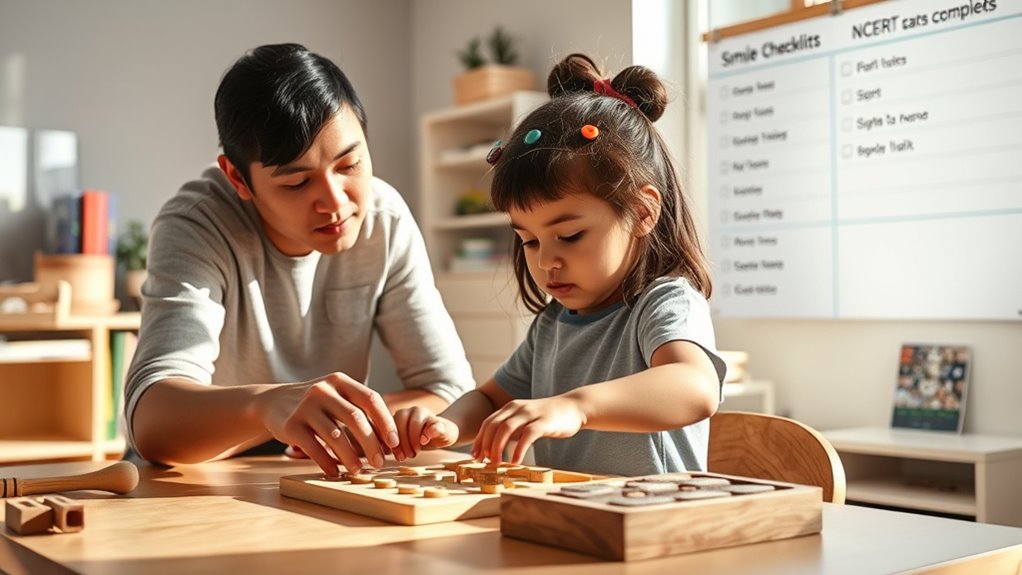
Partnering with parents at home completes the integrated learning approach by extending classroom routines into daily life. You play a pivotal role in aligning NCERT concepts with Montessori independence, creating continuity that strengthens understanding. Your active parental collaboration supports reflective practice, reinforces at home routines, and helps personalize learning paths. This partnership isn’t about oversight; it’s a mutually respectful exchange that clarifies goals, milestones, and concrete activities. Together, you optimize opportunities for exploration, collaboration, and self-directed growth, ensuring children experience meaningful, lasting growth beyond school walls. Stay attuned to pace, interests, and feedback to refine routines and expectations.
- Clarify weekly goals and activities that bridge school concepts with at-home routines
- Share short, concrete prompts that encourage inquiry and collaboration
- Track progress collectively, adjusting supports as needed
Frequently Asked Questions
How Do NCERT and Montessori Address Diverse Learning Styles Together?
You’ll see how NCERT and Montessori address diverse learning styles together through differentiated grouping and inclusive play, blending structured content with self-directed exploration to support belonging, collaboration, and targeted support that respects individual pacing and strengths.
Can Montessori Materials Adapt to Ncert’s Grade-Level Progressions?
Montessori adaptations can align with NCERT progression, but you’ll need careful mapping to grade goals. You collaborate to adjust materials, scaffold steps, and maintain developmental relevance while respecting NCERT timelines and learner belonging within the classroom.
What Is the Role of Technology in Mixed Ncert-Montessori Classrooms?
Technology integration boosts engagement by 40% in mixed NCERT-Montessori settings, you notice. You collaborate to balance digital tools with hands-on learning, prioritizing classroom management and inclusive aims, ensuring you feel belonging while refining analytical, concise strategies together.
How Are Student Assessments Balanced Between Standards and Exploration?
You balance assessment alignment by pairing standards with exploration, using ongoing classroom observation to calibrate tasks, ensuring curiosity leads, and you collaboratively refine rubrics and feedback, so every learner feels included and capable within the shared goals.
How Can Teachers Sustain Student Motivation in Blended Setups?
You’ll cultivate a steady melody of motivation, guiding students through blended setups with intentional motivational design and consistent classroom routines. You foster belonging, analyze progress collaboratively, and adapt strategies to keep engagement vibrant and resilient across modalities.