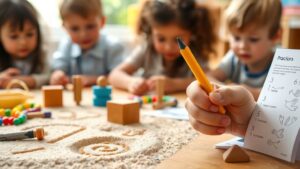

Integrating Howard Gardner’s Multiple Intelligences in the classroom helps you tailor instruction to diverse strengths. You’ll plan activities that engage linguistic, logical-mathematical, spatial, movement, musical, interpersonal, intrapersonal, and naturalistic learners. Use quick diagnostics to surface strengths, then design cross-intelligence tasks that blend skills and foster belonging. Implement flexible layouts, collaborative norms, and ongoing formative checks to map growth. With steady reflection and adjustments, you’ll build a more inclusive, mastery-focused environment. If you keep exploring, you’ll uncover practical steps you can apply today.
Eight Intelligences in the Classroom: What, Why, and How They Show Up
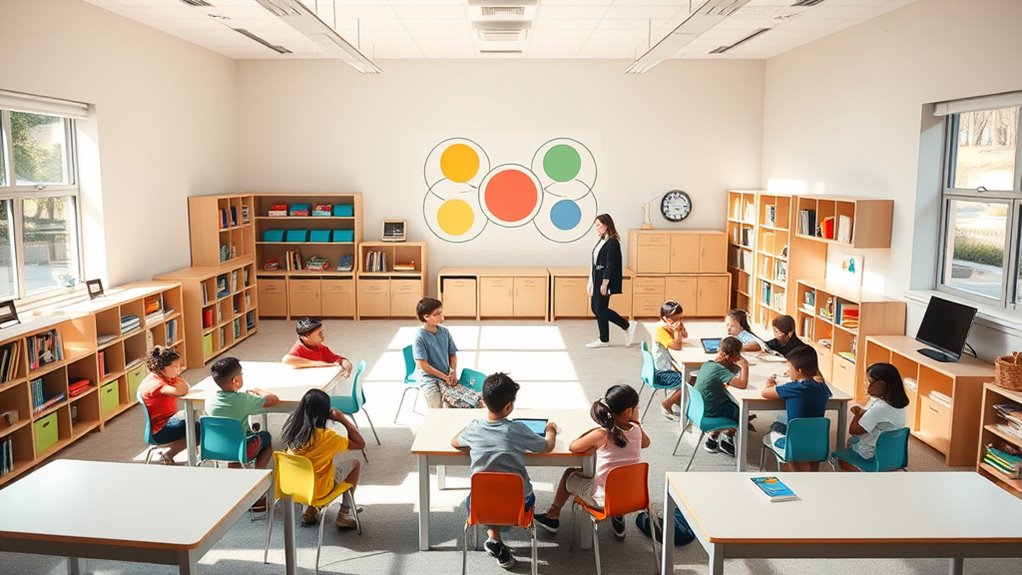
Eight distinct intelligences shape how students learn in the classroom, and recognizing them helps you tailor instruction to meet diverse needs. You’re invited to see how each intelligence shows up in everyday activities, quick reflections, and collaborative projects. You’ll value varied expressions—literacy, math, movement, and social insight—to dive belonging and confidence. When you blend music therapy into routines, you honor musical-rhythm proclivities and memory cues. Garden counseling can plant empathy, observation, and environmental awareness, supporting naturalistic and interpersonal strengths. You’ll design options that connect real life to academics, inviting every learner to contribute in meaningful ways. By honoring multiple pathways, you create a classroom where every student feels seen, heard, and capable of growth.
Assessing Strengths With MI: Quick Diagnostic Activities and Tools
Discover quick MI diagnostics you can use to surface students’ strengths across the eight intelligences. Try concise strengths inventory tools that you can implement fast, with clear prompts and quick scoring. Pair these with formative assessment strategies to tailor instruction and track growth over time.
Quick MI Diagnostics
Quick MI Diagnostics are fast, practical tools you can use to identify each learner’s strongest intelligences in minutes. You’ll create a sense of belonging by validating diverse minds through short checks you can repeat weekly. These quick measures center mindful assessment and nurture learner autonomy, so students take ownership of their growth.
- Observe brief, low-stakes tasks that reveal preferred approaches to problem-solving and expression.
- Use quick reflections or exit tickets to capture which modalities students choose naturally.
- Pair observations with a simple self-rating so learners see their strengths and set next steps.
With these steps, you gain actionable insight without pressure, keeping the classroom inclusive, responsive, and focused on each learner’s unique path to success.
Strengths Inventory Tools
How can you quickly uncover and organize students’ strengths using MI-informed tools? You’ll guide your class with simple, practical strengths inventory methods and clear assessment tools that honor diverse intelligences. These quick diagnostics help you map talents, curiosity, and collaboration tendencies, so every learner feels seen and valued. Use low-pressure prompts, quick drawings, and short oral summaries to collect data, then organize results by intelligence and interest. The goal is a shared picture you revisit, adjust, and celebrate together. Below is a sample table to spark engagement and collaboration:
| Strengths Inventory | Assessment Tools |
|---|---|
| Collaboration | Quick exit-ticket |
| Pattern recognition | One-minute reflection |
Two word discussion ideas: strengths inventory, assessment tools.
Formative Assessment Strategies
Formative assessment using MI-ready routines helps you capture and use students’ strengths as they’re revealed in real time. You’ll notice patterns quickly, guiding you to tailor tasks that honor diverse intelligences. Use quick checks that fit your classroom decor and feel natural within routines. Here are practical steps:
1) Employ decorative mnemonics and visual prompts as low-stakes probes, so learners reveal preferred styles without pressure.
2) Cycle brief, targeted checks after activities, enabling you to adjust next steps while maintaining belonging and momentum.
3) Document insights succinctly, then share next steps with students, reinforcing trust and a sense of community.
Designing Cross-Intelligence Activities: A Practical Framework
You’ll map cross-intelligence activities to match students’ strengths, pairing tasks that captivating multiple intelligences in one lesson. Start with a practical framework: define learning goals, select stimulating activities, and harmonize assessment with each intelligence type. Use clear checkpoints to guarantee the activities connect ideas across modalities and reinforce transfer.
Designing Cross-Intelligence Activities
Designing cross-intelligence activities involves linking multiple intelligences so students apply varied strengths to a single task. You’ll craft tasks that invite multiple perspectives, ensuring everyone feels seen. Your design should be intentional, collaborative, and adaptable to diverse learners.
- Start with clear goals and assessment rubrics that reflect multiple skill areas, so students understand how their strengths contribute.
- Arrange a flexible, inclusive classroom layout that supports movement, pairing, and rotation, fostering belonging and peer support.
- Build short, connected tasks that weave linguistic, logical-mathematical, and interpersonal elements, so outcomes demonstrate integrated understanding.
Practical Framework Steps
To put cross-intelligence activities into practice, use a practical framework that guides planning, implementation, and assessment. You’ll design tasks that mesh multiple intelligences, specify goals, allocate time, and outline rubrics. Begin with humor strategies to nurture safe risk-taking, then pair seating arrangements that maximize collaboration. Assess progress with clear criteria and reflect on student feedback to adjust if needed. This framework supports inclusion, belonging, and shared responsibility.
| Stage | Action | Outcome |
|---|---|---|
| Planning | Define goals; select activities | Alignment with strengths |
| Implementation | Manage tasks; group dynamics | Active engagement |
| Assessment | Observe; collect evidence | Growth understanding |
| Reflection | Gather feedback | Continuous improvement |
| Adjustment | Modify tasks | Sustained relevance |
Linguistic Intelligence in Action: Language Games and Word Play
How can language games and word play unlock linguistic intelligence in the classroom? You’ll discover how playful tasks ignite curiosity, collaboration, and confidence through language. You’ll feel connected as you explore meaning together, honoring each learner’s voice. Use these practical steps to integrate linguistic games and word play with clear intent and measurable outcomes.
- Introduce short, inclusive activities that celebrate diverse expressions.
- Rotate roles so every student contributes, edits, and critiques with respect.
- Debrief learning moments to reinforce vocabulary, syntax, and storytelling skills.
Linguistic games and word play reinforce belonging by valuing attempts and progress. You’ll cultivate a classroom where words become shared tools for thinking, reflection, and creativity, strengthening community and communication for all learners.
Logic and Problem-Solving for Logical-Mathematical Learners
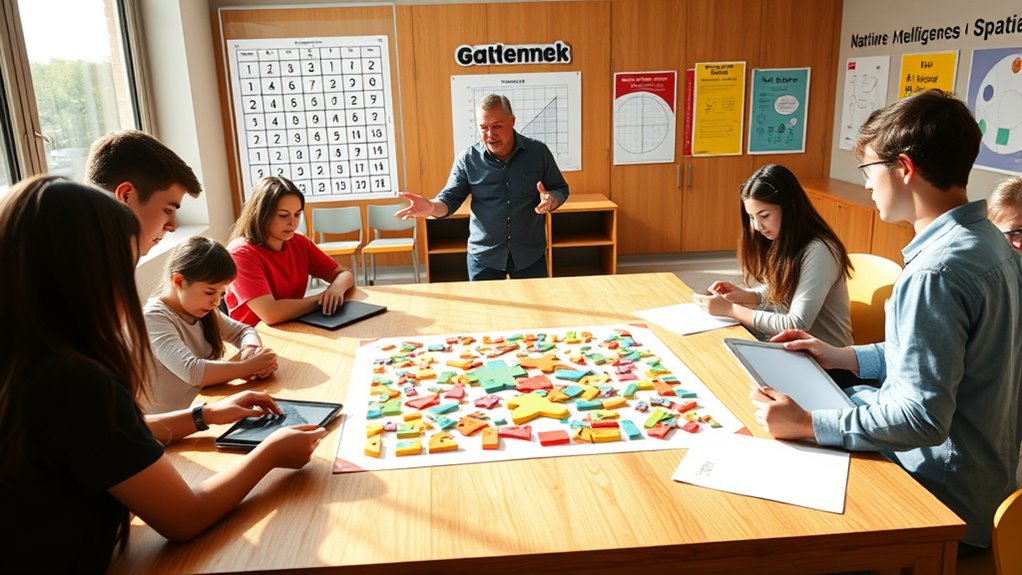
Logical-mathematical learners thrive when tasks emphasize reasoning, patterns, and systematic thinking. You’ll design activities that tease out logical connections and invite persistent experimentation. Start with concise prompts that frame problems, then guide rather than dictate, so students feel ownership over solutions. Use two word discussion ideas: logic puzzles, algebraic reasoning, to spark quick exchanges and peer learning. Encourage stepwise planning, hypothesis testing, and justification of every conclusion. Provide clear rubrics that value process and precision as much as final answers. Vary contexts from real-world data to abstract games, ensuring accessibility and belonging for all learners. Wrap up with reflective prompts asking what approach worked, what challenged you, and how you’d adjust strategies for clearer understanding. Your classroom becomes a hub of confident, collaborative problem-solvers.
Spatial Thinking and Visualization: Space, Maps, and Design
Ever wondered how we see and shape space around us? You can develop spatial thinking by noticing how rooms guide movement, how routes feel intuitive, and how scale changes perception. In this space, design visualization helps you translate ideas into clear forms, from layouts to schematics. You’ll practice maps interpretation to read environments, identify landmarks, and infer connections. Focus on clarity, precision, and belonging as you collaborate with peers to share perspectives. Consider these steps:
- Observe and sketch a space, noting flow, boundaries, and focal points.
- Compare map types, extracting orientation cues and symbolism.
- Translate insights into a practical design proposal that respects diverse needs.
Movement, Rhythm, and Expression for Bodily-Kinesthetic and Musical Learners
Movement, rhythm, and expression captivate bodily-kinesthetic and musical learners by weaving physical action with timing and emotion. You’ll explore how movement alignment shapes posture, balance, and intent, helping students connect body and meaning. Rhythm exploration becomes a collaborative practice, inviting everyone to feel pulse, accents, and syncopation together. In activities, you’ll design tasks that pair kinesthetic flow with purposeful listening, supporting inclusion and shared achievement. Use simple cues, simultaneous movement, and reflective talk to reinforce skills. Expect classrooms where students volunteer for demonstrations, offer feedback, and celebrate progress. movement alignment fosters confidence; rhythm exploration builds community through shared expression.
| Activity | Benefit |
|---|---|
| Echo claps | Improves timing |
| Guided stretches | Enhances focus |
| Group circle dances | Builds belonging |
| Tempo games | Reinforces rhythm |
Interpersonal, Intrapersonal, and Naturalistic Pathways to Mastery
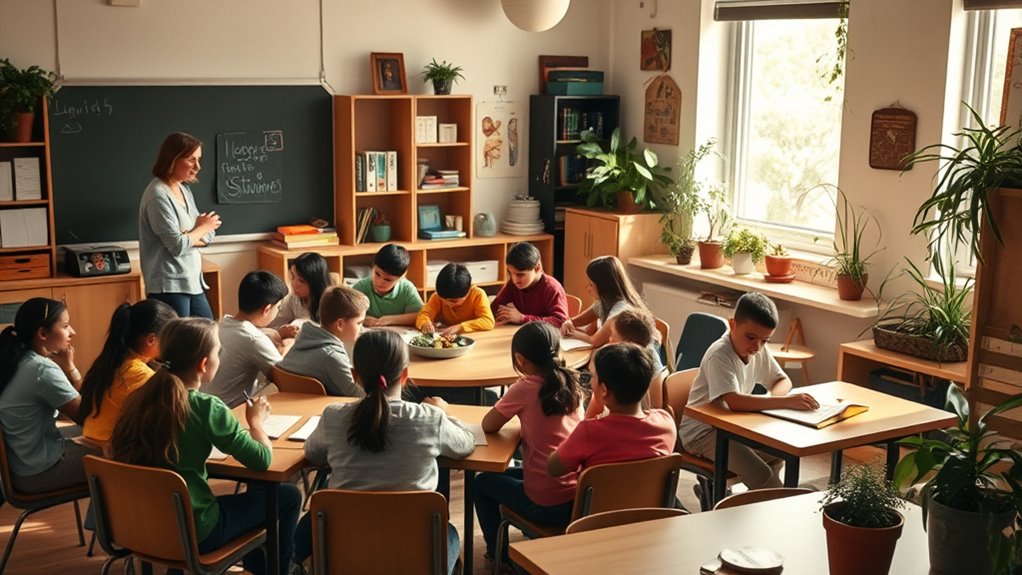
Interpersonal, intrapersonal, and naturalistic pathways broaden how students demonstrate mastery beyond traditional subjects. You’ll find that learning blossoms when you’re invited to connect with others, reflect inwardly, and observe the world around you. This approach honors belonging, so you feel seen, supported, and capable. Use these three strategies to structure your practice:
1) Foster interpersonal empathy through collaborative projects, peer feedback, and community engagement.
2) Nurture intrapersonal reflection with journaling, goal setting, and daily self-checks.
3) Recognize naturalistic patterns by linking learning to real environments, seasonal cycles, and hands-on exploration.
Together, these pathways strengthen confidence, curiosity, and social trust, empowering you to master knowledge in ways that fit your humanity.
Frequently Asked Questions
How Do MI Supports Teachers With MIxed-Ability Classrooms?
You adapt instruction by differentiated grouping and flexible assessment, meeting mixed-ability needs. You cultivate belonging, using varied tasks coordinated to strengths, offering choice, ongoing feedback, and scaffolding supports so every learner contributes meaningfully.
Can MI Align With Standards-Based Assessment Practices?
Yes, MI can align with standards-based assessment by linking learning targets to each intelligence and using diverse evidence. You’ll foster collaboration strategies and consistent classroom routines, ensuring students feel seen, supported, and truly belonging throughout the process.
What Are Practical Pitfalls When Implementing MI in Busy Classrooms?
You’ll encounter practical pitfalls like time constraints and busy schedules, which strain alignment with standards and measurable gains. Mixed ability and classroom dynamics, plus cultural diversity and language barriers, threaten motivation costs, assessment alignment, and standardization—watch for these.
How Does MI Address Cultural and Language Diversity?
MI promotes cultural empathy and language accommodation by recognizing diverse strengths, tailoring supports, and nurturing inclusive collaboration; you’ll confirm students’ backgrounds, adapt communication, and create shared belonging through responsive, multilingual, and culturally aware instructional options.
What Evidence Shows MI Improves Student Motivation and Achievement?
Evidence suggests a positive motivation impact from MI, with evidence synthesis showing modest yet consistent gains in engagement and achievement when lessons harmonize with students’ strengths, nurturing belonging and persistent effort. You’ll see gradual, meaningful improvements over time.