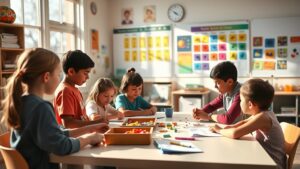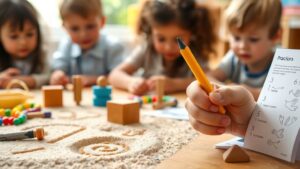
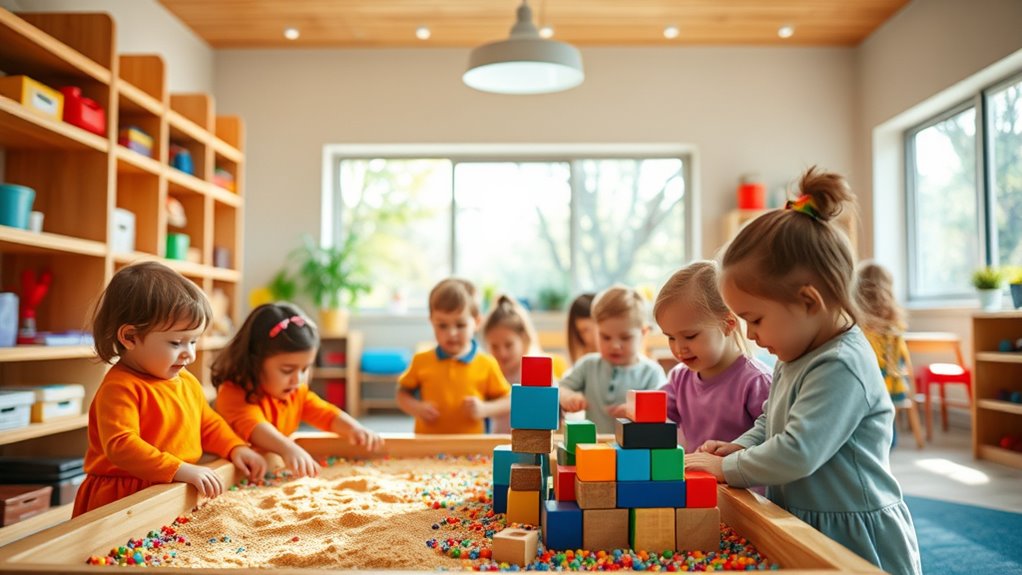
Play-based learning centers you as an active constructor of knowledge, linking authentic, hands-on activities to language growth, social skills, and confident problem-solving in safe, responsive classrooms. You’ll see how real-world play supports core skills through negotiation, hypothesis testing, and cooperation, with deliberate teacher support. Everyday moments—transitions, sensory exploration, and choice-rich routines—build belonging and independence. It also advances equity by welcoming diverse learners and families. If you keep exploring, you’ll uncover practical ways to apply these findings at home and in classrooms.
What Play-Based Learning Is and Why It Matters
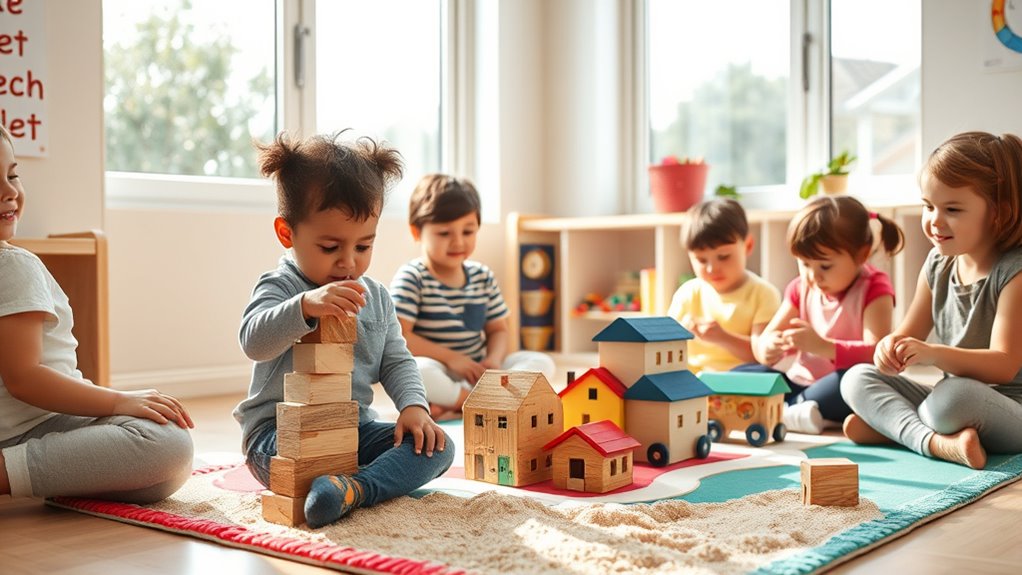
Play-based learning in early childhood is a research-backed approach that centers children as active constructors of knowledge. You explore ideas through play, guided by adults who notice what matters to each child. In this approach, learning emerges from authentic activities—sorting, building, storytelling, exploring—within safe, responsive settings. It’s not instruction-first; it’s discovery-first, with deliberate teacher support to sustain curiosity and deepen understanding. Evidence shows that play based experiences foster language growth, social skills, memory, and problem-solving, while honoring developmental timelines. In early childhood, play becomes a meaningful context for meaningful learning, embracing children’s questions and interests. When you participate with empathy and observe closely, you notice how each child tests theories, revises hypotheses, and feels a sense of belonging within a collaborative, inclusive community.
How Play Builds Core Skills in Young Children
Play emerges as a natural vehicle for building core skills, since children learn best when they’re actively exploring topics that matter to them. When you observe play, you’ll see problem-solving, cooperation, and flexible thinking unfold in real time. Dense practice becomes meaningful as kids negotiate roles, test hypotheses, and adapt strategies, all within safe, inviting settings. These moments contribute to concrete play outcomes—language growth, early numeracy, and fine- and gross-motor development—while deepening attention, memory, and self-regulation. Social interactions during play also deepen social cognition, helping children read cues, share responsibility, and build empathy. You support development by offering scaffolds that match their current interests and provide time for extended, uninterrupted play. In this way, play nurtures both independence and belonging, fostering confident, capable learners.
Everyday Play-Based Practices You Can Use Now
What practical steps can you take today to embed play-based learning into everyday routines? You invite learning through playful routines that blend curiosity with daily tasks. Start with duration-free play moments: open-ended materials like blocks, clay, and scarves during transitions, so exploration feels natural, not forced. Listen for questions, then extend them with simple challenges—“How many ducks fit on that tray?”—to build math and science thinking. Use sensory exploration deliberately: sand, water, textured fabrics, and smelling jars to spark memory and language. Frame routines as choice-rich experiences: offer options, respect pace, and celebrate small discoveries publicly to cultivate belonging. Observe what captivates each child, adapt materials, and document patterns to guide next steps, keeping the focus on the child’s interests and growth.
Advancing Equity and Inclusion Through Play
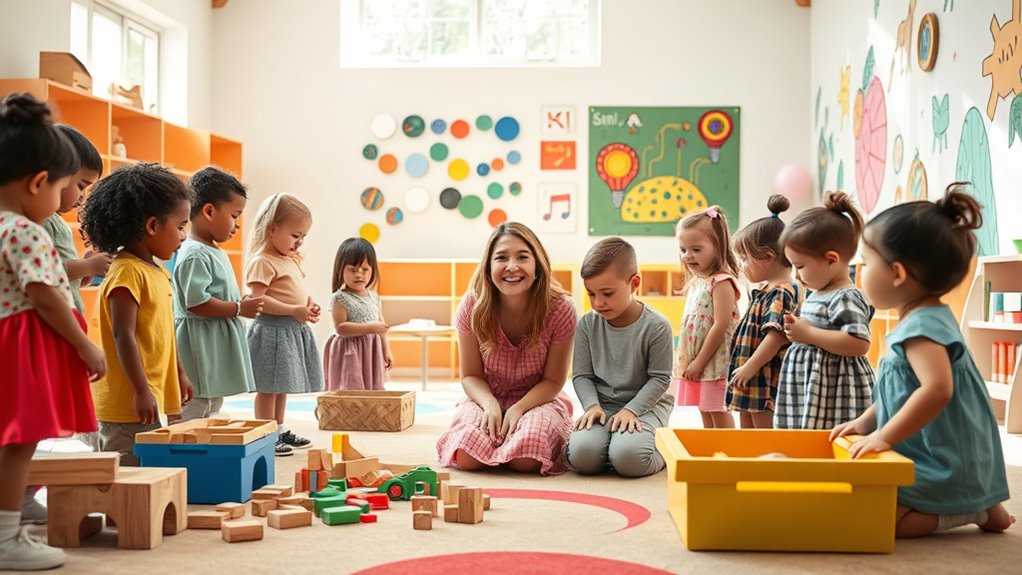
How can we ensure every child belongs and thrives at play? You create inclusive classrooms by designing flexible routines, materials, and boundaries that invite diverse learners to explore together. You prioritize play collaboration among peers, families, and educators, ensuring every voice helps shape the play environment. The evidence shows that meaningful peer interaction supports language, social skills, and self-regulation across development. You embed culturally sustaining practices, adapt prompts, and provide accessible, multisensory tools so all children participate fully. The goal is play equity: every child feels seen, valued, and capable. In your setting, inclusive classrooms become laboratories of curiosity, where differences are resources, not barriers. Table below illustrates potential roles and outcomes.
| Role | Approach | Outcome |
|---|---|---|
| Child | Open-ended prompts | Engagement |
| Educator | Co-facilitation | Collaboration |
| Family | Shared goals | Continuity |
| Environment | Adaptations | Accessibility |
Observing, Reflecting, and Measuring Impact
Observing, reflecting on, and measuring impact in play-based learning helps us understand how children grow when they’re immersed in flexible, culturally sustaining environments. You’ll notice development across social, linguistic, and problem-solving domains as play cues emerge. By documenting what kids choose, you’ll synchronize practices with their interests, rather than predefined scripts. Thoughtful reflection turns observations into actionable insights, guiding adjustments that honor each child’s pace and background. Use reflecting metrics to track progress over time, not as a single verdict. Be mindful of observing biases that may color interpretation, inviting collaborative review. Share findings with families to strengthen belonging.
- Observable play patterns and social interactions
- Language use and communicative goals
- Problem solving and hypothesis testing
- Engagement duration and spontaneity
- Alignment with goals, equity, and inclusion
Frequently Asked Questions
How Can Play-Based Learning Translate to Home Routines?
Play-based routines translate to home by embedding playful routines, guiding you to follow your child’s interests, observe development, and adapt; these moments promote home integration, belonging, and shared problem-solving within everyday, developmentally focused, child-centered activities.
What Challenges Do Teachers Face Implementing Play-Based Curricula?
You’ll face time constraints and curriculum pressures, but you can navigate challenges with playful assessment and strong teacher collaboration, prioritizing evidence-based, developmentally focused approaches that honor every child’s voice and foster belonging in your classroom communities.
How Do We Balance Play With Assessment Requirements?
Balance assessment by weaving playful documentation into daily routines, so you capture growth without stifling curiosity; you create evidence-based, developmentally-focused practices that honor each child, fostering belonging while revealing learning through meaningful, authentic interactions.
Can Play-Based Approaches Support Children With Disabilities?
Play-based approaches can support children with disabilities, using inclusive strategies that adapt activities to individual needs, promote participation, and nurture a sense of belonging through responsive, evidence-based, developmentally-focused, child-centered practices that honor every learner.
What Are Cost-Effective Materials for Play-Based Learning?
Yes—use cost effective, durable materials like simple blocks and loose parts, plus low cost tools. Open ended play supports exploration; you’ll nurture development, belonging, and evidence-based, child-centered growth through engaging, flexible, affordable resources.